The following notes on RRR were written by Josh Martin, the Cinematheque’s project assistant and a PhD candidate in the Department of Communication Arts at UW-Madison. RRR is the second title to screen in our weekend series, “Rajamouli: Myth, Spectacle, Cinema,” and screens on Saturday, November 14 at 7 p.m. in 4070 Vilas Hall, 821 University Ave. Admission is free!
By Josh Martin
On an early fall night in Los Angeles in September 2022, an excited audience of rambunctious viewers flocked to the TCL Chinese Theatre in the heart of Hollywood. Though the Chinese Theatre remains perhaps the city’s most historic cinematic venue, a storied locale that has seen no shortage of movie stars and thrilling premieres, now retrofitted into an enormous, overwhelming IMAX screen, something about this evening was different. Rather than the launching pad for a new Tinseltown blockbuster, this screening, part of a retrospective at the popular genre film showcase Beyond Fest, would serve as a grand celebration for one of the most remarkable global success stories in recent memory: writer/director S.S. Rajamouli’s RRR (2022).
The popularity of RRR in India was no surprise at all. Through the two-part Baahubali saga (2015 and 2017) and numerous other hits, Rajamouli was already the king of “Tollywood” (the informal name for the Telugu-language film industry), and any project of his was bound to be a massive event. Ultimately releasing five years after the conclusion of Baahubali, with numerous production delays caused by the COVID-19 pandemic, Rajamouli’s follow-up became the most expensive Indian film of all time (a title it has now ceded to this year’s Ramayana, directed by Nitesh Tawari), featuring a cast led by Jr. NTR (the colloquial nickname for N.T. Rama Rao Jr.) and Ram Charan, two of the Indian film industry’s biggest stars. With so much anticipation and financial might backing Rajamouli’s new blockbuster, it was nearly a fait accompli that RRR would break domestic box office records when it was finally released in March 2022.
However, in conjunction with the film’s success in India, a concerted effort emerged to build on the growing international interest in Rajamouli’s work and Indian cinema more generally. The film grossed a respectable $14 million in its initial run in the United States, less than the gross of Baahubali’s second installment (a potential result of deflated post-pandemic box office), which was quickly followed by the release of a Hindi-language dubbed version on Netflix. However, RRR’s story did not end there. In June 2022, the distribution company Variance Films offered a series of one-night only “encoRRRe” showings of the film. As industry periodical Deadline Hollywood noted, this targeted return to cinemas also brought RRR to many arthouses for the very first time, new terrain for a popular Indian film. The film was exceptionally well received, with Variance’s Dylan Marchetti remarking that RRR signified “three hours of joy at the movies” that could serve as a “gateway drug” for the further emergence of South Indian cinema as a stateside powerhouse. Rajamouli himself, in an accompanying interview with Deadline, noted that he was actively seeking this crossover appeal. “It’s really, really important for me because now I can expand even more,” Rajamouli emphasized. “More and more films are going to come and cross these language barriers and tap into people across larger areas.”
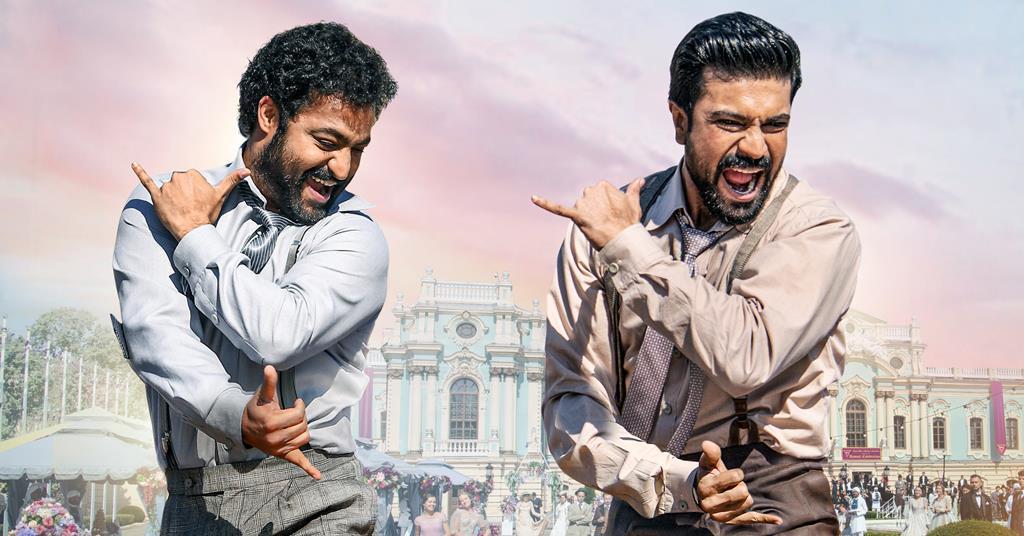
After the success of the “encoRRRe” screenings, Rajamouli arrived in Los Angeles for his first U.S. festival retrospective. In his opening remarks at the Chinese Theatre, Rajamouli noted that the about-to-combust-with-excitement audience reminded him of the crowds that pack theaters in his hometown of Hyderabad. With a chuckle, Rajamouli delighted in the knowledge that western audiences also “can be rowdies,” eager to turn a film showing into a participatory expression of jubilation. Indeed, with audiences primed to show off their admiration by the festival’s organizers, the evening turned out to be an especially raucous occasion. Most notably, during RRR’s main musical sequence, “Naatu Naatu,” a dance battle between the protagonists and their snobbish British adversaries, several audience members rushed to the front of the theater, feverishly dancing in tandem with our heroes. The infectious, party-like atmosphere seemed to reflect the electricity of the movie – and, perhaps, newfound excitement among Hollywood cinephiles about Indian cinema writ large.
With the suggestion of “gateway drug” potency and this singular screening event, a question must be asked: why RRR? What about this film in particular resonated so strongly with an international, specifically North American, audience? Such questions are not easily settled, but some clues may be found in the text of the film itself. Set in the early 1920s in British-ruled India, RRR opens by establishing its outsized, mustache-twirling villains: colonial officer Scott Buxton (the late Ray Stevenson) and his wife Catherine (Alison Doody, of Indiana Jones and the Last Crusade fame). Visiting a remote village, a young girl named Malli sings to entertain Catherine, who, with maximum callousness, eventually decides that she wishes to abduct Malli for herself. Following this terrible event, Rajamouli introduces viewers to his heroes: Bheem (Jr. NTR) and Raju (Charan), ahistorical exaggerations of real-life revolutionaries of the period. Bheem is in hot pursuit of those who took Malli; alternately, Raju is an officer trying to make a name for himself in the British ranks. The two men, through their outlandish rescue of a young boy, become fast friends – without Bheem fully knowing who Raju is (or, perhaps, is pretending to be).
Punctuated by the climactic image of blood splattered across an emblem reading “The Sun Never Sets on the British Empire,” RRR generates much of its cross-cultural force through a target of historical disdain shared by U.S. and Indian viewers alike: the colonial might of the British. Though the film prompted wide-ranging discussions in India for its engagement with national history, RRR was legible to international viewers first and foremost as a blatantly anti-colonial epic. These political matters paired snugly with the film’s exquisitely excessive melodramatic sensibility, in which the bonds of brotherhood between Bheem and Raju are violently strained – and action sequences defy all known laws of physics. U.S. critics joined in generating enthusiasm for RRR: praising the film’s ingenuity, The Atlantic’s David Sims highlighted its “stirringly maximalist poetry, the kind of sincere triumphalism that feels absent from peer Hollywood blockbusters.”
If its spectacular Chinese Theatre showcase put the Hollywood film industry on notice, RRR’s remarkable run in the U.S. ultimately brought Rajamouli and his team right back to Hollywood Boulevard, only this time to the neighboring Dolby Theatre for the Academy Awards. Though India selected Last Film Show (Nalin, 2021) as its nominee for Best International Feature, there was no stopping the momentum of “Naatu Naatu,” which emerged victorious in Best Original Song. Just over four years since RRR’s breakout on the North American stage, the promise of Indian cinema’s explosive growth in the U.S. has not quite been fulfilled: no Indian film has received an Oscar nomination since 2023, nor has wide box office success or mainstream cultural reach greeted any of the Indian blockbusters that populate U.S. screens. But with relatively strong financial returns for the first installment of Ramayana, as well as the impending release of Rajamouli’s long-awaited RRR follow-up Varanasi, the potential remains for popular Indian cinema to reach new international audiences, who, much like the viewers that filled the Chinese Theatre several years ago, will be ready to embrace these transnational blockbuster visions, cheering and dancing the night away.